
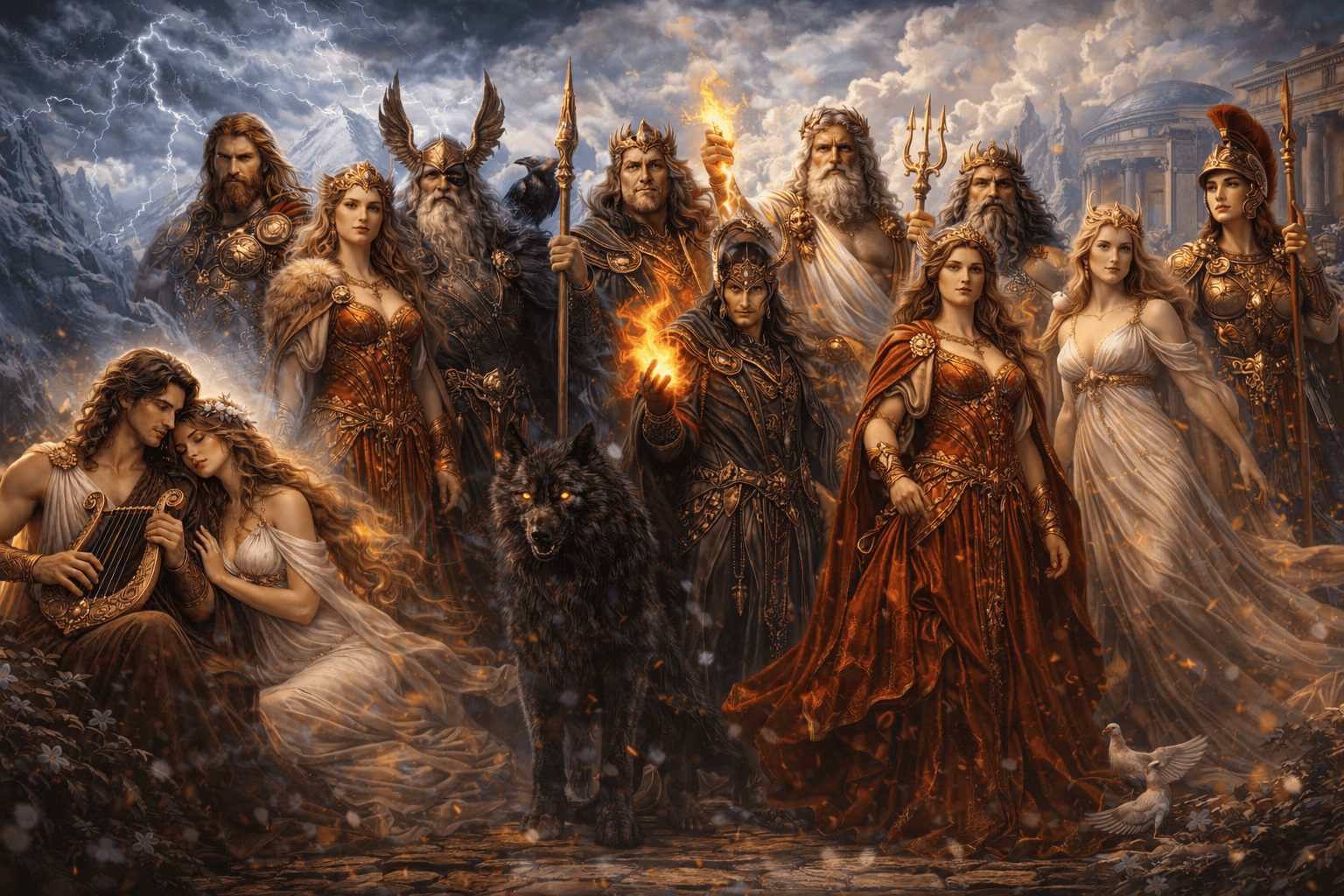
Mythology is where imagination and meaning meet: ancient people used stories to explain storms, seasons, love, loss, and the strange mysteries of being human. On Mythology Chat, we explore these tales as living conversations—stories that still shape art, language, and even the way we think about heroes and villains. You might arrive curious about roman gods or eager to compare norse legends with Mediterranean epics, and leave with a new favorite figure you’ve never heard of before. From underworld journeys and impossible bargains to radiant rebirth and sacred forests, mythology invites us to look at our world through a symbolic lens. Let’s step into that shared story-space and meet the deities, monsters, and mortals who keep returning—because their questions are still ours.
Underworld Roads, Lost Loves, and Shadowed Beginnings
Few myths feel as enduring as hades persephone, a story that mixes romance, power, and the turning of the seasons. Whether told as abduction, bargain, or transformation, it explains cycles of growth and dormancy while reminding us that beauty and darkness can be intertwined. In that same shadowed realm stands the erebus god, a personification of deep darkness—less a villain than a force that gives shape to the unknown. When you place these figures beside roman gods, you can see how stories traveled, changed names, and adapted to new cultures while keeping familiar themes: fate, duty, and the costs of desire.
Love myths often sharpen those costs. orpheus and eurydice is a heartbreak carved into a single rule: don’t look back. The tale asks whether trust can survive grief, and whether love can endure without certainty. Across the sea of myth, cupid and psyche tells a different kind of test—one where curiosity, betrayal, and perseverance become steps toward wholeness. You’ll also see the phrase eros and psyche because Eros is Cupid’s Greek counterpart, and the shifting names highlight how stories echo between traditions while keeping their emotional core.
Fire, Feud, and the Many Faces of the Divine
Mythology loves extremes, and nothing is more extreme than fire: it warms, destroys, purifies, and transforms. Many cultures describe fire gods as both creators and threats—keepers of hearths, forges, lightning, volcanoes, or sacred flames. These fiery figures pair naturally with warlike deities, because conflict and heat often move together in the mythic imagination. Modern pop culture sometimes bundles these forces into the idea of god of war greek gods, but the older stories are more layered: war deities can represent strategy and justice as much as rage, and fire can symbolize inspiration as much as catastrophe.
Out of fire comes one of mythology’s most beloved symbols: the mythical phoenix, the bird that burns and rises again. It’s an emblem of renewal that crosses borders and centuries, showing how a powerful image can migrate beyond one single pantheon. When Mythology Chat compares traditions, the phoenix becomes a bridge—proof that humans everywhere return to stories of survival, reinvention, and hope after ruin.
Forest Horns, Sacred Flowers, and the Landscape of Legend
Not all gods live in marble temples. Many live in woods, rivers, and wild places—especially in stories of the celtic gods, where nature is often sacred, mysterious, and close at hand. One striking figure is the cernunnos god, commonly linked with animals, fertility, and the untamed abundance of forests. These myths invite us to see the natural world not as scenery, but as a participant in spiritual life.
Greek myth, too, ties meaning to the landscape—sometimes through a single bloom. The hyacinth myth tells of beauty, tragedy, and remembrance, where a young life becomes a flower and grief becomes ritual. Taken together, these tales—Celtic wilderness, Greek gardens, Roman grandeur, and northern epics like norse legends—show mythology’s greatest strength: it turns human experience into symbols we can revisit, reinterpret, and share.
Conclusion
Mythology isn’t just a catalog of old stories; it’s a toolkit for thinking in symbols. Underworld journeys like hades persephone and orpheus and eurydice explore loss, change, and the consequences of love, while tales like cupid and psyche (or eros and psyche) remind us that growth often comes through trials. The fierce energy of fire gods and the renewal of the mythical phoenix speak to destruction and rebirth—patterns we still recognize today. And beyond the great temples of roman gods, the celtic gods and the cernunnos god keep the wild world close, suggesting that meaning can be found in forests as surely as in palaces. Here on Mythology Chat, these legends become conversation starters—ancient voices that still have something to say.