
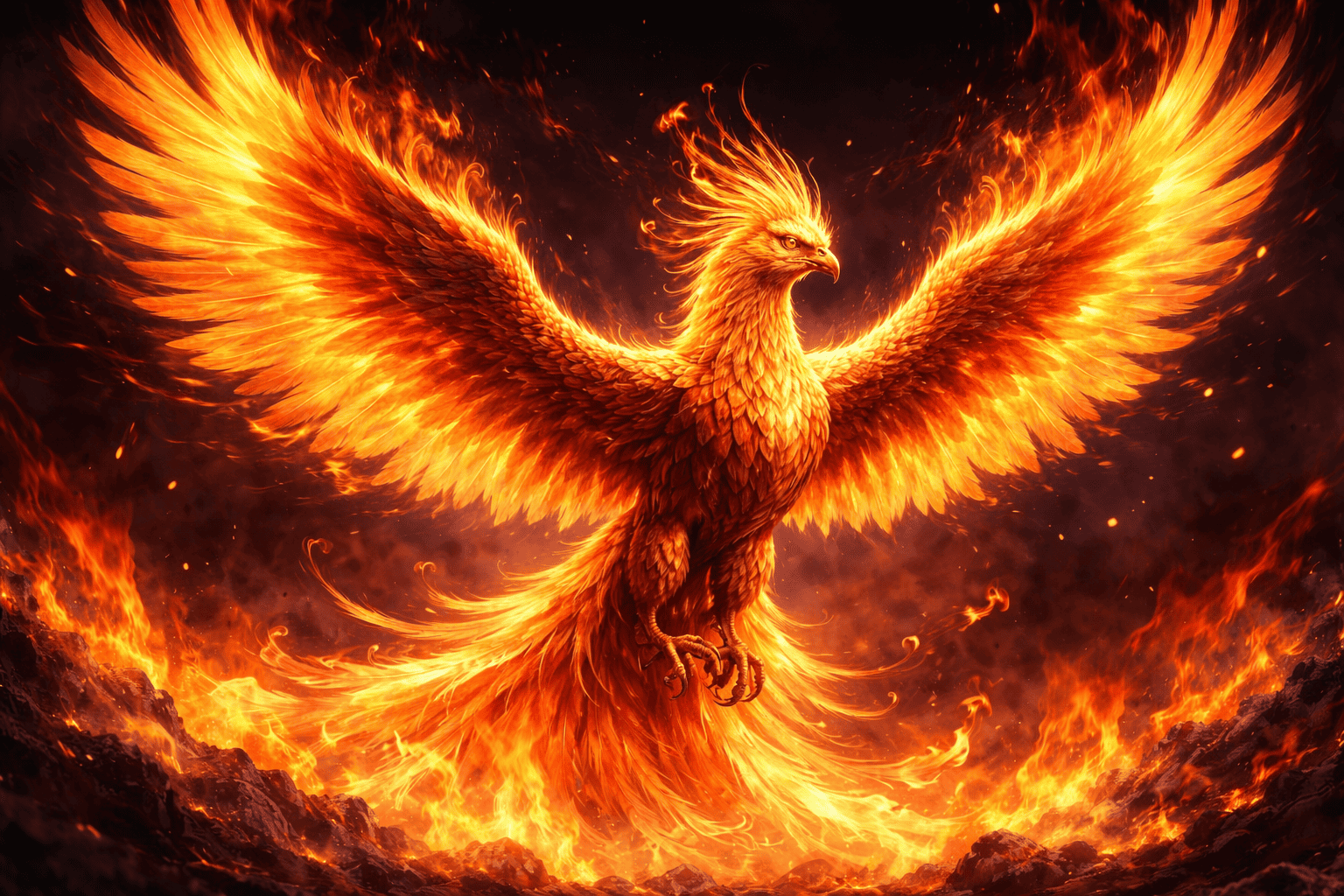
The phoenix is one of mythology’s most enduring symbols: a radiant bird that meets the flames on its own terms and rises again, reborn from ash. Across centuries and cultures, the mythical phoenix has represented resilience, purification, and the strange beauty of starting over. People return to this story because it speaks to real life—loss, transformation, and the hope that something bright can follow a collapse. Yet the phoenix is more than an inspirational metaphor. As a mythical creature phoenix, it carries rich details: blazing feathers, sacred fire, and a cycle of death and renewal that echoes the rhythms of seasons, empires, and human hearts. Whether imagined as a sun-bright bird or a rare sapphire blaze from blue phoenix mythology, the phoenix invites us to ask why we’re so captivated by endings that become beginnings.
Flames of Meaning: Why the Phoenix Burns
At the center of every phoenix tale is fire—destructive, cleansing, and creative all at once. In many traditions, flames are not merely an enemy; they are a tool of transformation. The phoenix’s burning is voluntary, almost ceremonial, turning catastrophe into purpose. That’s why the phoenix often appears in stories about renewal after disaster: cities rebuilt, dynasties reformed, spirits reshaped. In some versions, the bird’s ashes become the cradle for new life; in others, a small egg or ember remains, suggesting that renewal begins with something tiny and easily overlooked. This is the heart of the phoenix myth: the power to change is not the absence of pain, but the ability to move through it.
The phoenix also reflects how ancient people understood the cycles of nature. Crops are harvested, fields go fallow, and new growth returns. The sun sets and rises. The phoenix makes that pattern vivid and personal, turning cosmic repetition into a single, unforgettable creature. As a phoenix mythical animal, it embodies the idea that life is not a straight line but a circle—sometimes a spiral—where the “end” is also a doorway.
The Phoenix in Greek Imagination: Sunlight, Song, and Ash
While the phoenix is famous across cultures, it often gets discussed through a Greek lens, especially when people mention the phoenix bird greek mythology tradition. In Greek-inspired tellings, the phoenix is linked to the sun and to distant lands where wonders begin at the horizon. The bird is portrayed as rare, solitary, and radiant—less a flock creature and more a living omen. That solitude matters: the phoenix’s cycle is a private ritual, suggesting that transformation can be intimate and inward, not always witnessed or understood by others.
Greek myth also loves stories where love and loss reshape fate, and the phoenix fits that emotional terrain. Think of how myths explore devotion under pressure—how characters endure trials, descend into danger, or bargain with destiny. A natural companion story is cupid and psyche, where love is tested, broken, and rebuilt through patience and change. Like Psyche’s journey, the phoenix’s rebirth implies that becoming new often requires facing what we fear most: failure, separation, and the burning away of illusions.
Beyond Red and Gold: The Allure of the Blue Phoenix
Most people picture the phoenix in reds, oranges, and molten gold, but blue phoenix mythology offers a striking twist. A blue phoenix suggests a cooler, more mysterious flame—one that speaks to wisdom, rarity, and the quiet intensity of transformation. Blue fire can symbolize spiritual purification rather than raw destruction, shifting the phoenix from a dramatic spectacle into a guiding presence. In modern retellings, a blue phoenix might appear when renewal is subtle: not a roaring blaze, but a steady light that helps someone persist. This color variation shows how flexible the phoenix is as a symbol—able to absorb new meanings while keeping its core promise: that endings can become thresholds.
Conclusion: What the Phoenix Still Teaches Us
The phoenix endures because it tells the truth in mythic language: we all face moments that burn away what we thought was permanent. As the mythical phoenix, it isn’t a denial of loss—it’s a portrait of what can happen after loss, when we gather ourselves from ash and choose to begin again. As a mythical creature phoenix, it bridges the natural cycles of the world and the emotional cycles inside us, reminding us that renewal is not magic without cost. Whether imagined as a sun-bright wonder from phoenix bird greek mythology or re-envisioned through blue phoenix mythology, the phoenix remains a promise with feathers: transformation is possible, and the story doesn’t have to end where the flames begin.