Celtic stories don’t always feel like myths sealed behind glass; they feel like weather—rolling in, shifting, and touching everyday life. In celtic mythology, gods and spirits move through forests, rivers, and fields, shaping fate through oaths, hospitality, courage, and craft. Rather than a single neat family tree, the celtic pantheon is a wide landscape of celtic deities whose identities can vary by region and tradition. Some are guardians of place, some are masters of skills, and some blur the line between god, hero, and ancestor. This flexible, living quality is part of the charm: the stories invite you to listen closely, notice patterns, and accept mystery as a feature—not a flaw.
The Shape of the Celtic Pantheon
Unlike myth systems that spotlight one central mountain of gods, the celtic pantheon is often best understood as a network. Different Celtic-speaking peoples—across Ireland, Britain, and parts of ancient Gaul—preserved different names, emphases, and local powers. That’s why you’ll see overlaps and echoes rather than a single standardized “cast list.” In many tales, a deity’s role is revealed through what they protect: sovereignty, harvest, poetry, healing, war, or the boundaries between worlds.
What ties these traditions together is the sense that celtic deities are deeply entwined with land and community. A river is not just a river; it can be a goddess with a history. A hill can be a threshold. A king’s legitimacy may depend on honoring sacred customs, and a hero’s downfall can begin with breaking a taboo. These stories are full of bargains, blessings, and consequences—myths that teach by showing how life responds to respect, arrogance, generosity, or greed.
Cernunnos and the Sacred Wild
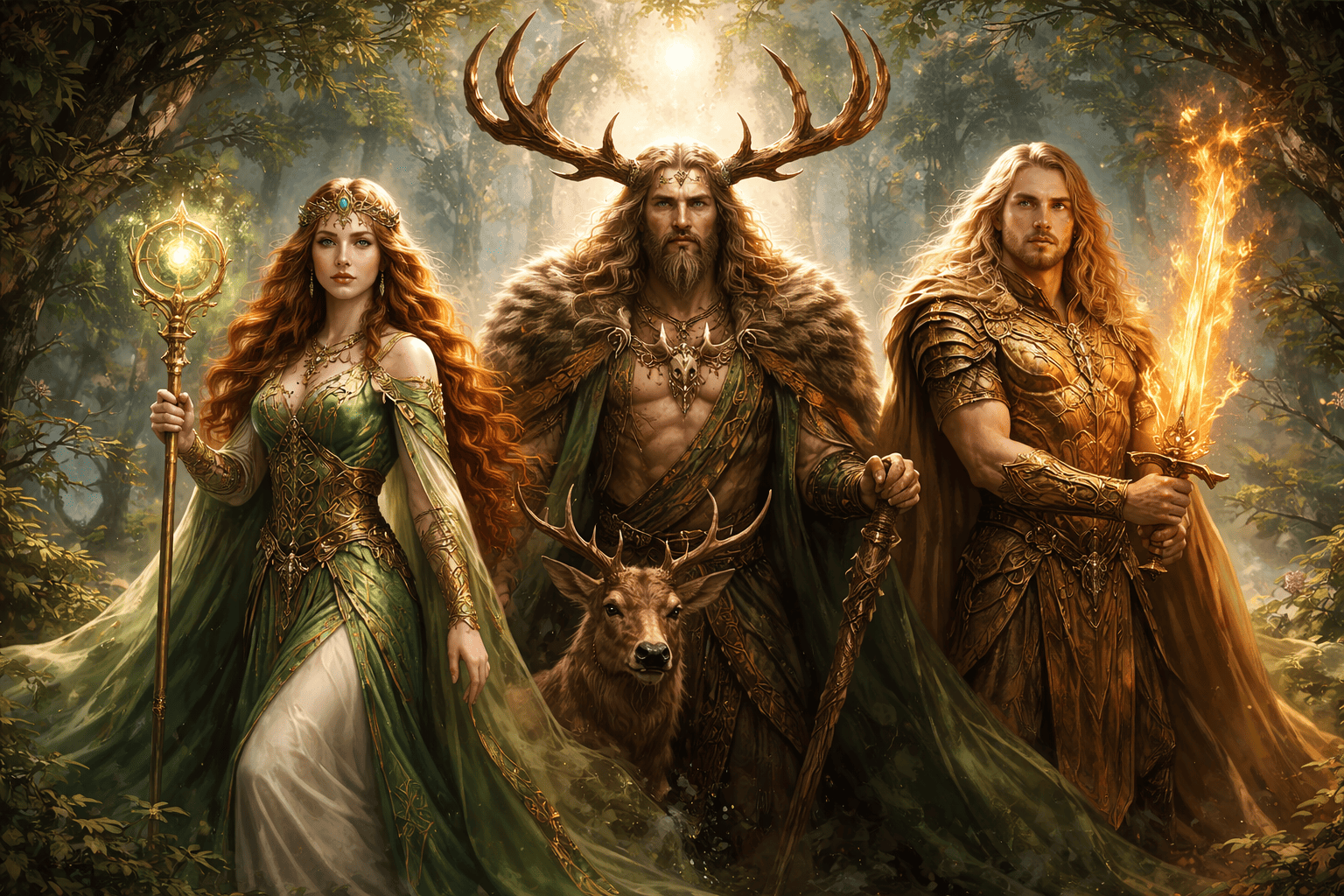
Few figures capture the “wild heart” of Celtic tradition like cernunnos god, often associated with animals, abundance, and the untamed rhythms of nature. Depictions commonly show him horned or antlered, seated in a calm, powerful posture—suggesting not chaos, but a grounded authority over the living world. When people speak of the cernunnos deity, they’re often pointing to a symbol of balance: predator and prey, growth and decay, forest and field.
It’s tempting to reduce him to a single label, but Celtic myth thrives on layered meanings. Read one way, the cernunnos deity is a guardian of prosperity and fertility. Read another way, he is the reminder that humans are guests in a larger ecosystem. In a mythic sense, he represents the sacred contract between civilization and wilderness: if you take, you must give; if you rule, you must respect what cannot be owned.
Deities of Skill, Sovereignty, and Story
Many celtic deities shine through the skills they embody—poetry, metalwork, healing, strategy—because in Celtic tradition, mastery is a kind of magic. Wisdom can be won through hardship, knowledge can arrive through song, and craft can carry spiritual weight. You’ll also find gods and goddesses tied to sovereignty, where the land itself seems to “choose” a rightful ruler through omens, trials, or sacred unions.
Storytelling is crucial here: myth is not only entertainment, but a way of remembering values. That’s one reason celtic mythology often feels intimate and ethical. Heroes feast, boast, fail, repent, and try again. The otherworld is close—sometimes reached by crossing water, entering a mound, or simply taking a wrong turn at twilight.
And because myth traditions love conversation across cultures, it can be fun to notice how themes travel. For example, when you read the hyacinth myth from Greek tradition—where beauty and tragedy are braided together—you might recognize a similar Celtic instinct: flowers, seasons, and young lives can become symbols of devotion, loss, and the price of passion. The details differ, but the emotional logic feels familiar: nature remembers, and stories turn grief into meaning.
Why Celtic Mythology Still Feels Alive
Part of the lasting power of celtic mythology is its refusal to separate the spiritual from the everyday. The world is enchanted not because it is unrealistic, but because it is deeply observed. Rivers have moods. Promises have weight. Places hold memory. The celtic pantheon invites you to see life as relational—between people, between people and land, and between the known and the unseen. Whether you’re drawn to the mystery of the cernunnos god, the artistry of other celtic deities, or the moral pressure of taboos and oaths, these myths offer a sturdy kind of wonder: one that asks you to live with attention, courage, and respect.